Erenth Podcast Episode 1 - Through the Vale of Sleep

Lady Carma’s Account of the Vale of Sleep (Recorded in first person with unedited transcript by Vicor Onagg)
I did not know I had died.
I thought I had simply fallen, struck by stone and darkness and the indifference of gravity.
But when I opened my eyes, the world had no weight to it.
The sky was a color I have never seen in the waking world—a bruised twilight that neither brightened nor deepened. It was as though someone had paused the heavens mid-breath. Clouds hung motionless, shaped like unfinished thoughts. There was no sun, yet everything was dimly visible, as if illuminated by memory rather than light.
The grass beneath me was damp and cool, and when I pressed my hand into it, it left no impression. It smelled of rain that had fallen centuries ago, of soil long forgotten, of incense burned for prayers no one remembered.
I tasted earth and iron on my tongue.
I reached for my sword and felt only air.
My armor was gone. My holy symbol was gone. I felt naked—not in body, but in faith. As if someone had stripped away the scaffolding that held my belief upright.
A man stood nearby.
He looked at me with tired eyes and a crooked smile, as though death were a minor inconvenience. A piece of his skull was missing, and I could see mist moving where his thoughts should have been. He called himself Weasel.
His voice sounded hollow, as if it echoed inside a cavern even when he whispered. When he spoke, his words felt heavier than the air, settling into the grass like dust.
He told me not to follow the lantern in the distance. He said crowds walk toward it like moths and call it peace. He said his uncle warned him about that, once.
I listened to him, but the Light did not speak.
That frightened me more than his wound.
The sky screamed.
I felt the sound before I heard it—like a pressure behind my eyes, a vibration in the bones I no longer trusted to be real. The Nightwing descended from the sky, wings tearing at the stillness like knives through cloth. Its shadow felt cold, and its breath tasted like old regrets.
When it struck me, its venom burned with memories that were not mine. I felt every doubt I had ever buried flare to life. I felt every prayer I had ever wondered was unanswered press against my heart.
I remember thinking, So this is how I end—without armor, without prayer, without dignity.
Then I woke again.
The second time, I knew I was not alive.
The air did not move. My breath did not fog. The world had the texture of a held note, sustained until it became unbearable.
Sound carried strangely. Footsteps echoed long after feet stopped moving. My own heartbeat sounded distant, like a drum played in another room. When I spoke, my words returned to me altered, as though someone else had repeated them with different meaning.
I walked toward a tavern because souls, it seems, gather where stories gather. The boardwalk creaked beneath me, but the sound felt symbolic rather than structural, as though the wood was acting out a memory of creaking.
Inside, the tavern smelled of stale ale, dust, old wood, and the faint sweetness of flowers left at graves. The patrons were frozen in small tragedies: a bride tracing circles on a glass, a pilgrim whispering apologies into his cup, a fisherman staring into his hands as if still holding a net.
Their voices were soft, overlapping like prayers spoken by people who did not believe they would be heard.
Behind the bar stood a woman whose eyes reflected things I had never seen. When she looked at me, I felt cataloged, as though I were a footnote in a cosmic ledger.
She told me this place was the Vale of Sleep.
She told me belief shapes this realm, that thought and faith are architecture here. When she spoke, the walls subtly shifted, like a house listening to a conversation.
I did not like her.
But the Light was still silent, and her words had weight.
The manor was the worst part.
The forest around it was quiet in a way that made my ears ache. Leaves did not rustle. Insects did not sing. Even the ground seemed reluctant to remember footsteps. The house loomed like a prayer that had been abandoned halfway through.
Inside, dust hung in the air like unspoken words. Every room smelled of candle smoke and cold stone and disappointment.
The paladins were still kneeling.
Their armor was rusted into their bones. Their tabards were threadbare banners of forgotten vows. When they spoke, their voices layered atop each other, a choir of resignation.
Their words felt like cold hands around my wrists.
They told me hope was cruelty, that waiting was a lie, that prayer was a way to starve with manners. They told me the gods reward obedience with silence.
And for a moment, I believed them.
The Light was distant—present, but thin, like sunlight seen through deep water. I felt my connection to it stretch like a thread drawn too tight. I felt the weight of every unanswered prayer I had ever uttered.
I felt how easy it would be to stop.
I have never told anyone how tempting that was.
The sword was simply there.
It did not glow until I touched it. It did not sing until I believed in it. The hilt felt warm, like a hand grasping mine in the dark. When I lifted it, I felt the Light laugh—not mockingly, but with something like relief, as if it had been waiting for me to make up my mind.
The fallen knights began to fade. Their despair peeled away like old paint. I felt their gratitude like a pressure behind my eyes, like tears that were not mine.
Forgiveness has weight.
It almost knocked me to my knees.

The Nightwing returned.
The sky felt closer, pressing down on the ruins. The air tasted sharp, like lightning before a storm. The creature’s presence made the world feel smaller, like a room with too many regrets in it.
I felt fear. I felt anger. I felt exhaustion.
But beneath it all, I felt something new: ownership of my faith.
I prayed, but not as I had been taught. I did not ask permission. I did not ask for intervention. I said only, I will not despair.
The Light surged—not from above, but from within and around and through me. It felt like stepping into a river that had always been flowing, whether I noticed or not.
The battle was chaos—wings, claws, light, venom, memory. The Nightwing did not die. It unraveled. It fled like a story that no one believes anymore.
When it vanished, the sky breathed again.
When I woke, the world had weight.
Air moved. Sunlight hurt. My armor was heavy. My sword was real.
My friends’ voices were loud and imperfect and alive. Their prayers had found me, somehow. Or perhaps I found myself.
Holding the sword, I felt something terrifying and holy.
Sometimes the gods answer.
Sometimes they delegate.
Sometimes we are the answer.
In the Vale, the Light did not leave me.
It waited to see what I would do without certainty.
Unprompted Addendum: On Faith
In the Vale, faith felt less like a command and more like gravity.
Not something imposed, but something fundamental—inescapable, shaping everything.
I realized I had always believed through the Church, through my armor, through ritual.
There, stripped of all of it, belief was naked.
It was not comfortable.
It was not obedient.
It was powerful.
If the Church asks, I still believe.
If the scholars ask, I still doubt.
If the people ask, I still hope.
But I will never again assume hope is someone else’s responsibility.
The Synodic Inquiry into the Vale of Sleep
From: High Canon Archivist Thalorine, Church of Westrun
To: Master Seraphel Vire, Lyceum of Resonant Histories
Master Vire,
Your recent treatise, On the Passage of Lady Carma Through the Vale of Sleep, has been formally reviewed by the Synodic Archivum and brought before the Council of Orthodoxy.
While the Church recognizes your longstanding contributions to planar historiography and bardic scholarship, several assertions within your work are deemed doctrinally irresponsible and potentially destabilizing to the faithful.
Specifically, the Synod notes with concern the following claims:
That faith may operate independently of direct divine will, implying a metaphysical agency in mortal belief itself.
That despair constitutes an autonomous metaphysical entity, rather than a moral and spiritual failing of mortals.
That the Holy Sword borne by Lady Carma represents a spontaneous theological manifestation, rather than a relic sanctified by divine act, celestial artisan, or ecclesiastical rite.
These propositions border upon heterodox metaphysics and risk encouraging speculative theologies beyond the Church’s guiding authority. While inquiry is not forbidden, public dissemination of such conjecture—particularly when attached to a living paladin of the Church—may confuse the laity and invite dangerous misinterpretation.
Accordingly, you are hereby requested to submit:
Your planar divination transcripts
Resonance scan records
Witness interviews and corroborative bardic memory matrices
These materials will be reviewed by the Synod for doctrinal compliance and archival classification.
We trust you will understand the necessity of this review in preserving unity of faith and orthodoxy of teaching.
In Light and Order,
High Canon Archivist Thalorine
Office of Sacred Records and Doctrinal Integrity
Church of Westrun
On the Passage of Lady Carma Through the Vale of Sleep
Compiled by Master Seraphel Vire,
Senior Chronicler of the Lyceum of Resonant Histories,
Fellow of the Sapphire Collegium,
With Commentary and Notes for Future Scholars
Prefatory Note
Among the many contested accounts of near-death experiences
recorded in the Collegium’s archives, the case of Lady Carma, Paladin of the Church of Westrun, is singular in both theological and metaphysical
significance. The subject not only traversed the interstitial realm commonly
called the Vale of Sleep, but returned bearing a relic whose provenance
had previously been classified as mythic speculation (see Appendix III:
“Swords That Should Not Exist”).
What follows is a reconstruction based on her testimony,
corroborated by planar divinations, bardic resonance readings, and no fewer
than three intoxicated eyewitnesses.
I. On the Nature of the Vale of Sleep
Lady Carma reports awakening in a liminal field under a sky
neither day nor night, devoid of divine presence yet not wholly abandoned. This
description aligns with pre-Cataclysmic accounts of the Transitory Eschaton
Plane, colloquially the Vale of Sleep.[1]
Notably, she lacked armor, weapons, and holy symbols
suggesting that material faith does not transfer across planar thresholds,
or that the plane strips symbols to test sincerity of belief.[2]
II. On the Entities Encountered
A. The Soul Called “Weasel”
The subject encountered a disembodied soul identifying
himself as Weasel, suffering cranial fragmentation yet displaying no
distress.
This aligns with Psychic Residual Self-Perception Theory,
wherein souls manifest self-image at the moment of death or greatest regret.[3]
His warning against following the lantern-lit ferry
corresponds with known Mass-Transit Psychopomp Routes, typically leading
to final judgment without agency.[4]
B. The Nightwing
Lady Carma was attacked by a winged venomous entity she
termed a Nightwing. This creature matches Nightmare Court servitor
taxonomy:
- Bat-like
wings
- Toxin-based
despair-inducing venom
- Behavioral
pattern: testing and culling the resistant
Her initial defeat and subsequent cyclical awakenings
suggest the Vale permits iterative existential trials rather than linear
death progression.[5]
C. The Tavern and Its Proprietor
The subject visited a tavern populated by regret-bound
souls, archetypal in nature (Bride, Pilgrim, Fisherman). These figures are
consistent with Mnemonic Archetype Imprints, common in liminal
dream-realms where identity erodes into narrative roles.[6]
The tavern keeper provided direct exposition on the
Nightmare Court and the metaphysics of belief shaping reality—information too
accurate for random dream logic. I therefore classify the keeper as a Didactic
Psychopomp (see also: “Bartenders Who Know Too Much”).[7]
III. On the Ruined Manor and the Fallen Paladins
The manor containing deceased paladins is of exceptional
theological interest.
The fallen knights expressed despair due to unanswered
prayers, indicating that paladins who die in faithless isolation may become
self-reinforcing despair-echoes, rather than proceeding to divine
realms.[8]
Their attempt to persuade Carma to abandon hope suggests
despair is contagious and memetic, supporting the Entropic Faith
Collapse Model proposed by High Cantor Meriselle.[9]
IV. On the Holy Sword
The blade was found not bound by prophecy or enchantment but
simply waiting. This contradicts standard relic genesis models.
Hypothesis A: The sword is Faith-Condensed Potential,
manifesting when a paladin refuses despair in a despair-saturated zone.
Hypothesis B: The sword is a temporal bootstrap relic, placed by Carma
herself in a future timeline (see Temporal Paradox Blade Theory, Appendix VII).
Notably, the fallen knights were released upon its claiming,
implying the weapon functions as both spiritual key and theological
counter-meme.[10]
V. The Final Conflict
The Nightwing’s second manifestation and defeat aligns with
the pattern of Final Proof Trials, wherein a soul must act upon newly
acquired belief to exit the liminal state.[11]
That the Nightwing fled rather than died suggests nightmares
cannot be destroyed, only disproven.
VI. Return to Material Plane
Carma’s companions discovered her near death in a pit,
corroborating the Somatic Anchor Hypothesis, which posits that liminal
journeys require a living body as a metaphysical tether.[12]
Her return with the sword constitutes a Category V
Anomalous Artifact Emergence, warranting ongoing study and potential Church
concern.[13]
Concluding Remarks
Lady Carma’s case demonstrates that:
- Faith
functions as a metaphysical force independent of divine intervention.
- Despair
forms quasi-entities capable of persuasion and resistance.
- Belief
can crystallize into material relics under sufficient existential
pressure.
It is my professional opinion that hope is not merely a
virtue but a plane-shaping constant—and that paladins should be encouraged
to engage in controlled despair exposure under academic supervision.[14]
Annotations & Footnotes
[1] See Eschatological Waystations and You, Vol. II,
Collegium Press.
[2] Church of Westrun disputes this, claiming equipment loss is “aesthetic.”
[3] Weasel’s casual attitude toward cranial absence remains unexplained.
[4] Ferry usage recommended for civilians; strongly discouraged for heroes.
[5] See also “Respawn Phenomena in Post-Mortem Dreamscapes.”
[6] Similar to stock characters in bardic epics; troubling implication.
[7] Also classified under “Suspiciously Helpful NPCs.”
[8] This finding has caused three minor schisms already.
[9] Meriselle later retracted after experiencing existential dread.
[10] The Church has requested the blade for “inspection.” Carma declined.
[11] Comparable to initiation trials of the Dawn Monastery.
[12] See Case Study: “The Monk Who Forgot to Come Back.”
[13] Classified as “Please Do Not Touch Without Consent.”
[14] Proposal rejected by ethics committee (and everyone else).
Appendix: Bardic Note to the Reader
While this document aspires to academic rigor, it should be
remembered that all bardic scholarships are filtered through song, memory, and
at least one glass of wine.
Should further data be required, Lady Carma has agreed to interviews, though she insists on calling them “adventures, not experiments.”
The Whisker Squadron: Backstory
For half-orcs living among men, life was nasty and brutish. It promised to be short.
From their earliest memory they lived near the city, surrounded by people who didn't look like them, nor act like them. They were raised from infancy by the Lords on "The Farm." Manual labor was their lot from Moonsday through Firesday. On Satyrsday they were allowed to play "The Game." On Sunsday they were allowed to rest.
Each Satyrsday, for as long as they could remember, "The Game" began in the morning at the playhouse -- an old barn on the farm. They would play a game called guesswords with a full human -- someone called Whitebeard. He knew more words than the Lords who seemed to mostly understand profanity. By playing this game, Whitebeard taught them to speak the language of the forest and another that he said it was their birthright to learn.
After Whitebeard was done with his lessons, the lords taught them to play with daggers and shortswords and slings. Then, after noon, they brought in still others to teach other games -- how to pick pockets, open locks, find/remove traps, move silently, hide in shadows, detect noise, and climb walls. There were many teachers -- some who only came once and some who came frequently.
One such frequent teacher was named Riven One-hand. Despite missing his left hand and ear, he was an expert at climbing and tying knots. Riven was an excellent climber, but it was also clear that he was bitter toward the Lords. He was kind and gracious whenever they were around, but when they left him alone with the half orcs, his charges learned other things.
He told them romantic stories of his life as a bowman -- a professional climber. His tales were full of adventures taken, loot stolen, and women conquered. He claimed to have climbed the massive stone horses built into its walls. He also said he climbed each of the ancient Twelve Towers inside -- the sight of which the half-orcs had never known.
Riven called the half-orcs his "whiskers." He spoke often of the fact that they were asleep and needed to be wakened. He made promises that if they ever left The Farm that there would be a shiny slice of life waiting for them. In so doing, Riven taught them a third language, one that neither Whitebeard nor the Lords spoke. They learned it well and used it to communicate with each other when they did not want to be overheard.
It was a ten year stay on the Farm, working hard in the fields and playing hard in the old barn. When the training was done, there were only eight left. One by one others were taken away, to do other things or to live other lives. One Firesday the Lords told them that they had graduated, would be given Satyrsday as leave and would depart by ship on the Sunsday for destinations and missions unknown.
The Miner's Lament
Daymarch was a small bywater community until silver was discovered by a farmer digging a new well. His farm was closed and excavated. Where crops once grew, a mine opened. Suddenly, almost overnight, Daymarch received a charter from the Steward of Bolden to become a city.
Lord Casul, a baronet from distant lands, quickly rose to prominence with his suggestion that a company of gnomes be contracted to work the mines, and one of dwarves be contracted to build the wall. Within a year, the city was built and silver was flowing from it as quickly as the Harn river traveled past it.
Almost as soon as it was complete, the oldest resident of Daymarch appeared in the skies above. For decades the dragon had demanded tribute of the town. Now that it had become a city of wealth, its demands increased ten fold.
Daymarch and it's Dragon
Having defeated the Knights of Daleria, and done a great service for the Church, Patriarch Ulric agreed to give Baron Choon Yi a letter of introduction to the High Court.
This was unusual for one of such a lowly rank; Choon Yi was a minor noble, while His Grace Halinard, the High King of Westrun, usually only treated with Dukes and Kings, like Choon Yi's leige the King of Rath. A letter of introduction does little in such a case, but it grants face time and the opportunity for official acknowledgement which can never hurt. The other petty nobles of Rath are sure to be envious. The King of Rath might be nervous to have one of his bannerman directly in contact with his own leige.
The court of a king is often a boring affair, the court of the High King all the more so, but the day of his introduction at the high court was anything but. The newly walled city of Daymarch was missing its dragon.
The people of that fair place didn't petition their king to drive off the beast, so much as to find out where he'd been. They had been paying the monthly tribute for 60 years and it wasn't like him to not collect. For the last 3 months, the goods they piled outside of the city had sat abandoned on the plains. Pilferers took the coin. Wolves got the sheep. The kegs of wine ended up in many a farmer's cellar. The Lord Mayor's small council was concerned. It seemed wasteful to keep leaving a tax that went uncollected. Yet, to risk a dragon's ire by not paying... that was madness. So, a delegation was sent to the King of Bolden and was refused. They turned then to the High King in the hopes that he would intervene.
Fortunately, Lord Choon and his assorted knights and free riders were on hand when the High King received his news from abroad. The aging monarch looked up and around his court.
"Who will go for me to Daymarch?" he asked.
The courtiers and ladies looked at the floor. House knights and hereditary lords stared quiety. Lord Choon was not like them. He knew it and they knew it. He had earned his title the hard way -- with a sword in one hand and a torch in the other. He had battled foes, killed monsters, and survived traps that would have ended any of these stuffed shirts around him. He bore the scars upon his body.
He stepped forward, "Good King!"
"Yes, worthy lord."
"I will go for you to Daymarch."
The High King smiled and nodded. The other great men assembled breathed a sigh of relief. But the great monarch of all Westrun was not finished with the pageantry of the moment.
He intoned his warning solemnly, "You speak quickly -- there will be dangers."
Choon stood impassive.
The High King continued, "It may mean the end of you, who only so recently became a lord and a member of my court."
Choon felt the eyes upon him and said nothing.
"Will you accept still now, knowing all the dangers?" the High King asked.
Choon repeated evenly, "I will go for you to Daymarch."
The king nodded. "Where is my chamberlain? Where is Garwen?"
A man pushed his way from the wall of the throne room. The way slowly parted for him. He was brown-haired and pale. He wore velvet brocade trimmed in gold.
"I am here, your grace!" said Garwen.
"What can you advise Lord Choon and his retinue, regarding this dragon?" the High King inquired.
"This is a fools undertaking, your Grace, there have been no dragons sighted in Westrun for a century or more. Moreover, these people of Daymarch are simple folk and have likely mistaken some other lizard for an actual dragon. Finally, under the Fourth Law of the Codex ought to be referred to their King, your cousin, who sits on the throne of Bolden. He granted the charter to Daymarch to become a city, he is responsible for their protection."
"Am I not the High King?"
"You are, your Grace. In the matters of dispute between the lesser kings. And, of the Highway and the Northern and Southern walls; and of course over the Free Provinces."
"Does not the Second Law of the Codex also apply?"
"I fail to see how, your Grace," The chamberlain shook his head.
"What did Wald the Lawgiver say?" The High King was a scholar in his own right.
Garwen closed his eyes and quoted from memory, "We acknowledge that the masses have no champion greater than the Prince of Peakshadow, and their mistreatment shall be as an affront to his throne."
The High King inquired. "Am I still the Prince of Peakshadow?"
"You are, your Grace."
This was unusual for one of such a lowly rank; Choon Yi was a minor noble, while His Grace Halinard, the High King of Westrun, usually only treated with Dukes and Kings, like Choon Yi's leige the King of Rath. A letter of introduction does little in such a case, but it grants face time and the opportunity for official acknowledgement which can never hurt. The other petty nobles of Rath are sure to be envious. The King of Rath might be nervous to have one of his bannerman directly in contact with his own leige.
The court of a king is often a boring affair, the court of the High King all the more so, but the day of his introduction at the high court was anything but. The newly walled city of Daymarch was missing its dragon.
The people of that fair place didn't petition their king to drive off the beast, so much as to find out where he'd been. They had been paying the monthly tribute for 60 years and it wasn't like him to not collect. For the last 3 months, the goods they piled outside of the city had sat abandoned on the plains. Pilferers took the coin. Wolves got the sheep. The kegs of wine ended up in many a farmer's cellar. The Lord Mayor's small council was concerned. It seemed wasteful to keep leaving a tax that went uncollected. Yet, to risk a dragon's ire by not paying... that was madness. So, a delegation was sent to the King of Bolden and was refused. They turned then to the High King in the hopes that he would intervene.
Fortunately, Lord Choon and his assorted knights and free riders were on hand when the High King received his news from abroad. The aging monarch looked up and around his court.
"Who will go for me to Daymarch?" he asked.
The courtiers and ladies looked at the floor. House knights and hereditary lords stared quiety. Lord Choon was not like them. He knew it and they knew it. He had earned his title the hard way -- with a sword in one hand and a torch in the other. He had battled foes, killed monsters, and survived traps that would have ended any of these stuffed shirts around him. He bore the scars upon his body.
He stepped forward, "Good King!"
"Yes, worthy lord."
"I will go for you to Daymarch."
The High King smiled and nodded. The other great men assembled breathed a sigh of relief. But the great monarch of all Westrun was not finished with the pageantry of the moment.
He intoned his warning solemnly, "You speak quickly -- there will be dangers."
Choon stood impassive.
The High King continued, "It may mean the end of you, who only so recently became a lord and a member of my court."
Choon felt the eyes upon him and said nothing.
"Will you accept still now, knowing all the dangers?" the High King asked.
Choon repeated evenly, "I will go for you to Daymarch."
The king nodded. "Where is my chamberlain? Where is Garwen?"
A man pushed his way from the wall of the throne room. The way slowly parted for him. He was brown-haired and pale. He wore velvet brocade trimmed in gold.
"I am here, your grace!" said Garwen.
"What can you advise Lord Choon and his retinue, regarding this dragon?" the High King inquired.
"This is a fools undertaking, your Grace, there have been no dragons sighted in Westrun for a century or more. Moreover, these people of Daymarch are simple folk and have likely mistaken some other lizard for an actual dragon. Finally, under the Fourth Law of the Codex ought to be referred to their King, your cousin, who sits on the throne of Bolden. He granted the charter to Daymarch to become a city, he is responsible for their protection."
"Am I not the High King?"
"You are, your Grace. In the matters of dispute between the lesser kings. And, of the Highway and the Northern and Southern walls; and of course over the Free Provinces."
"Does not the Second Law of the Codex also apply?"
"I fail to see how, your Grace," The chamberlain shook his head.
"What did Wald the Lawgiver say?" The High King was a scholar in his own right.
Garwen closed his eyes and quoted from memory, "We acknowledge that the masses have no champion greater than the Prince of Peakshadow, and their mistreatment shall be as an affront to his throne."
The High King inquired. "Am I still the Prince of Peakshadow?"
"You are, your Grace."
The High King smiled. "Well, I am affronted by this mistreatment of my masses."
Garwen seemed exasperated, "Your Grace, you are affronted that a so-called dragon does not collect his extortion?"
The entire court was enrapt by this discussion, looking from the High King to his chamberlain to the baron who had volunteered and was still standing.
The High King was smiling as he stood with flourish and declared, "Give Lord Choon Yi a letter of introduction to the Lord Mayor of Daymarch. Tell all who inquire that he is to find the dragon, treat with it and determine what will restore the proper order of things in that corner of Bolden. Let it be known that for the masses of people who look to the Prince of Peakshadow to make things right, they will not be disappointed."
The chamberlain bowed low, "As you wish, your Grace."
Garwen seemed exasperated, "Your Grace, you are affronted that a so-called dragon does not collect his extortion?"
The entire court was enrapt by this discussion, looking from the High King to his chamberlain to the baron who had volunteered and was still standing.
The High King was smiling as he stood with flourish and declared, "Give Lord Choon Yi a letter of introduction to the Lord Mayor of Daymarch. Tell all who inquire that he is to find the dragon, treat with it and determine what will restore the proper order of things in that corner of Bolden. Let it be known that for the masses of people who look to the Prince of Peakshadow to make things right, they will not be disappointed."
The chamberlain bowed low, "As you wish, your Grace."
The Knights of Daleria Part 8: Exemplar of Evil
The last of the Knights of Daleria was none other than his lordship Haldemar Grymbalde, Baron of Jasmia in Menea, and Patriarch of the House of Grymbalde. By letter to Baron Snow, he described himself as Lord Exemplar of the Knights of Daleria, Guardian of the Ebon Citadel and bearer of the Frostworn Blade.
A Grandfather's Plea part 2: A Wicked Son
Briddleton is home to the House of Bridlern. Upon investigation the adventurers (now reunited) discover that the son and scion of that noble house has terrorized the people of the town for years. Especially terrorized, young women know not to travel alone when the young baronet is about. A girl matching Alyssa Draken's description has not specifically been seen.
Seeking audience with the baron, the party learns that the nobleman has many detractors at court on account of his son. Outwardly, at least, Lord Bridlern is anxious to see justice done. He calls for his son who is said to be out riding the countryside, or perhaps hunting.
A trial is held in absentia as the party solicits testimony from aggrieved free people and peasants alike.
A Letter of Greeting to the New Lord of Sewendia
A Letter of Greeting to Choon Yi, sometimes called Snow, Baron of Sewendia in Rath;
from his lordship Haldemar Grymbalde, Baron of Jasmia in Menea, Lord Exemplar of the Knights of Daleria, Guardian of the Ebon Citadel and bearer of the Frostworn Blade.
My lord, I have the honor of writing you on the occasion of your investiture to the Baron of Sewendia. I fear that your recent honors will come to naught and that the good folk of that province will soon be looking for a new baron to lead them in the eyes of God and man.
Make haste to meet me and bring your pitiful band of assassins with you. Justice awaits those who spill the blood of noblemen with impunity, and I mean to have justice. You will not find me so easy to take as my peers. Leopold was a heavy blow, I admit -- he was as a son to me and like you, newly minted. As for the others, they will be replaced when your heads are on a pike.
May you find mercy in the hereafter, for you will find none here.
A Grandfather's Plea part 1
After the defeat of the undead gnome, Snow sought audience with King Larcus of Rath while the rest of the party went to the king's magister (who is none other than the Primus of the College of Melf) to seek the restoration of their companion. That companion, and others, had been made a goldfish by the magic pool.
Magister Antonius had the party assemble and wait for him well outside of the city as there were several goldfish to see restored. While they were waiting for the wizard's arrival, a well-dressed man wearing the sigil of a noble house approached the party and asked them to rescue his daughter from the clutches of the Bridlerns. He advised that he had no coin to pay them, but promised a favor and the favor of a nobleman is good to have.
So, as Antonius worked his magic, Fenris and Aaron made all due haste for the Barony of Bridlern, accompanied by the aged nobleman.
The trip was three days of rushed travel and culminated at the Horned Keep of Bridlern. Along the way, Fenris and Aaron learned that their employer was none other than Van Draken, a nobleman who had been a tournament knight of some renown well into his elder years. The missing maiden was Alyssa Draken and he said she could be identified by her distinctive red hair.
As they had made haste on their journey, Van said he was too tired to enter the town. He wanted to rest his weary bones on the green outside of Briddleton, which the lord's keep overlooked. Fenris and Aaron reconnoitered the town and sought what information they could on the noble family.
They discovered that the young heir of Bridlern was the scourge of Briddleton's young women, indeed all the lower bred women of the entire province. Investigation by the adventurers determined that Alyssa had likely been kidnapped and violated.
Meanwhile, Antonius the Wizard had restored several of the goldfish to their true selves, including Tathlan, who experienced a mental breakdown from the process. He was restored to the size and shape of his former self, but could not help thinking that he was a goldfish still -- and one out of water. As he flopped on the ground and blew out his cheeks, his companions restrained him. They were only able to calm his frazzled nerves by pouring water on him and speaking gentle words. The Magister could only nod thoughtfully and admit, "Sometimes that happens." He warned them, that for the rest of his life, Tathlan was in danger of having such attacks. In times of great stress, or after having suffered wounds, he would be prone to such fits. The only hope to calm him would be the presence of water and the assurance of his friends.
Having restored their companion, the party then went out after Fenris and Aaron and after riding through two days and a night caught up to them in the town of Briddleton.
The Sleeping Evil Defeated
Inside the Bawdy Rose was a apparently-mute man by himself. The bartender and the scantily clad songstress were hiding; all other customers had fled the scene. While the party was looking for a gnome, they were well-acquainted with magic that changed appearance and did not feel fooled by the tall human with bushy hair.
Suddenly, an attack!
The Sleeping Evil Confronted (from another angle)
Leaving the court of King Larcus, the three adventurers (Snow, Knu and Titanus) came across some of the city watchmen carrying a spasming body. The unfortunate appeared to be wracked with laughter, and just as he was brought abreast of them, expired.
The watchmen dropped the body unceremoniously and advised that this was the twelfth person they had known to die this way. They say that they were ordered to bring the next person they could find suffering to the magister for examination. Just then, they were joined by Magister Antonius.
Antonius bent over the body with a strange glass disc in his hand. When he had made a full examination of the deceased he bid the body be turned over and examined it again. Next, he checked every orifice.
"This is no disease," Antonius declared. "I believe it to be more akin to a curse. Something thoroughly evil has unleashed it upon the innocents of Rath."
When the party inquired where something like that might be hiding, Antonius speculated that it might be born of the Labyrinth of Abu Adon. The watchmen said that the deceased man was carried from Preston Street. He was a retired adventurer who had earned his knighthood on the field of battle and lost it gambling in the slums of Rath. A degenerate to be sure, but he was a stout man and survivor of many battles. Laughter should not have brought him low.
The party proceeded to Preston Street and found themselves outside of the Bawdy Rose where a commotion was heard inside.
The Investiture of Snow
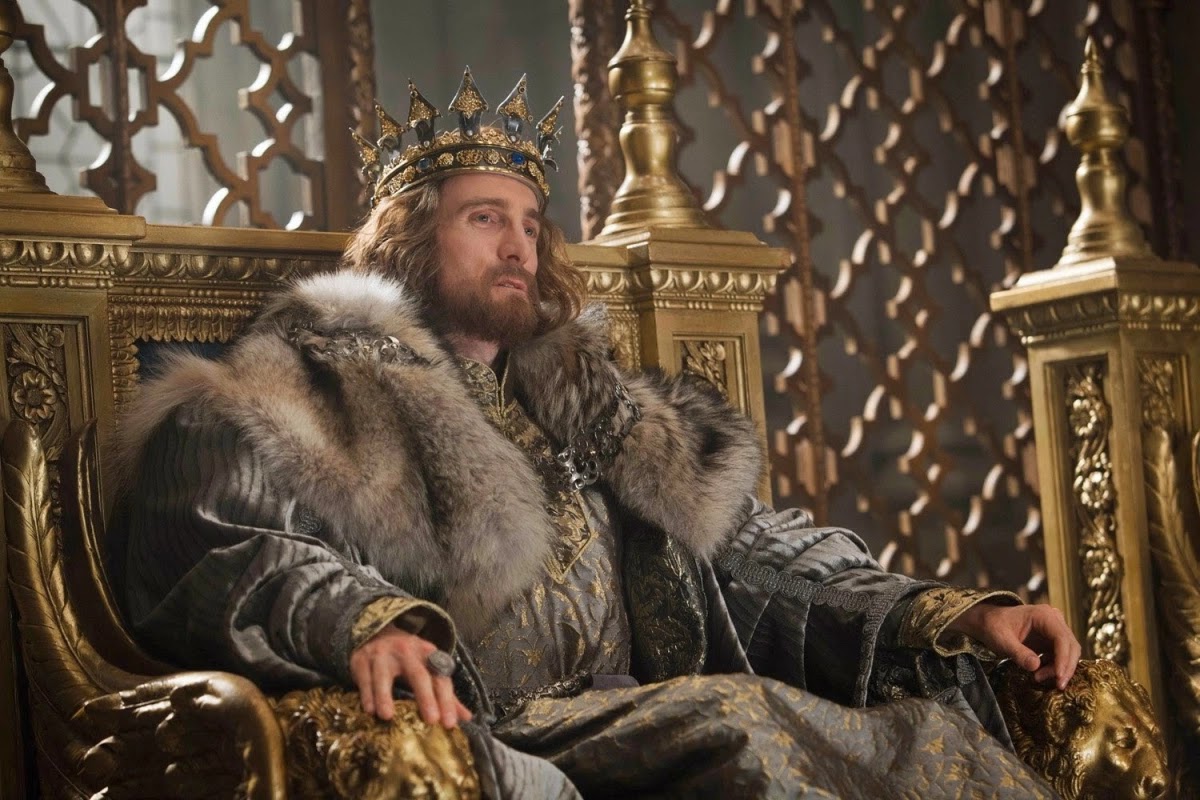
The court of King Larcus Gregoras of Rath boasts several nobles: dukes, counts and barons alike. In addition, there are baronets without number, dozens of gentlemen and gentlewoman, to say nothing of the house knights, men-at-arms and free lances that are in great supply. The King also has his cabinet arrayed on his right, along with his ministers and the men who serve his lands and estate. On the left side wall are entertainments waiting to be called: a poet, several minstrels, his jesters, and the King's own bard. Arrayed before him are the courtiers, diplomats, claimants and hangers-on who all wish to be see or heard. Also in attendance are Patriach Newson of the Church of Westrun in Rath and Magister Antonius of the College of Melf.
On the docket today are matters which are dispensed with swiftly.
The Sleeping Evil Confronted

By applying the combined curative faculties of the Paladin, the Cleric and the Monk; the party managed to save Sir Apollo from certain death. Resigned to leaving their friend Tathlan in the pool for the time being, they retired to Rath to plan their next move. After ascending the crypt stairs, the party clambered from the grave and made their way toward the Inn of the Hammer and Nail. But as they neared their destination, the party heard laughter that sent a chill up their spines.
The Sleeping Evil Awakened

After forty minutes of excavation at the bottom of the grave, the party unearthed a narrow passage that lead laterally from it. A faint emanation of magic was detected by the wizard, so the party pushed into the subterranean darkness aided by dweomer of light.
An Ambuscade in Rath

Rath is the capital city of the Kingdom of the same name. The party arrived there to resolve the claim of Hakon of Sewendia who wanted to be recognized as the regent of that province. With that in mind, the party split to find lodging and to press toward the city's center, hoping for an audience at court of King Larcus.
Subscribe to:
Posts (Atom)